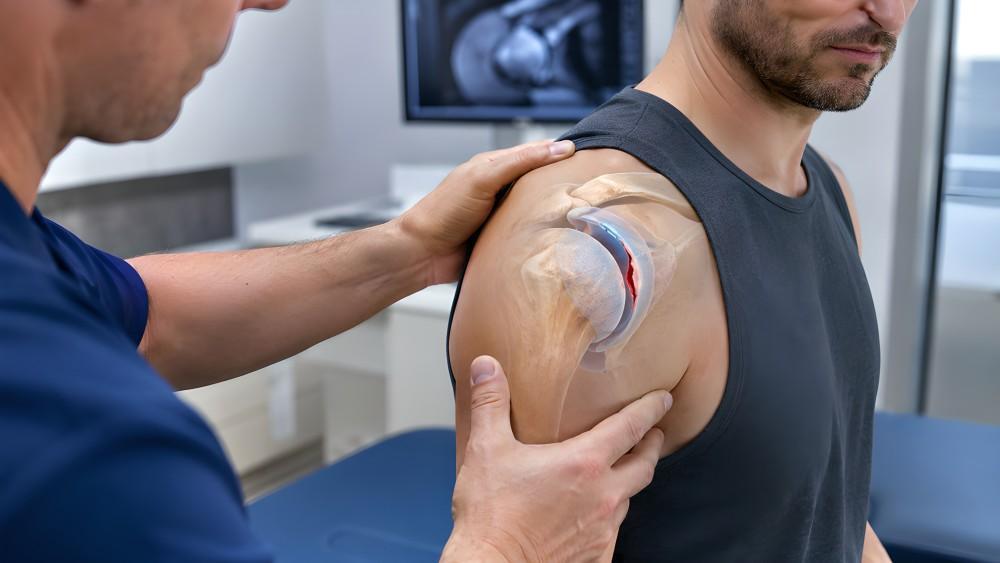
Are you an athlete sidelined by a painful labral tear? The labrum is a ring of cartilage that stabilizes your shoulder or hip joint. Healing this tissue takes time, and rushing back to sports or training too soon can cause permanent damage.
At Coastal Orthopaedics and Sports Medicine in New Port Richey, Florida, we know how frustrating it is to sit on the bench. Dr. Peter Candelora helps active adults regain their mobility and strength. We specialize in advanced sports medicine and minimally invasive arthroscopy to get you back in the game safely.
Returning to play after labral tear surgery requires patience and a clear plan.
What is the recovery timeline for arthroscopic labral repair?
Recovery from an arthroscopic labral repair follows structured phases designed to protect your healing joint. You cannot rush this biological process.
In a 2023 study in the Journal of Bone and Joint Surgery of 97 young athletes recovering from shoulder labral repair, researchers structured rehabilitation into three key phases:
- Phase 1 (weeks 0 to 6): Immobilization to protect the repair
- Phase 2 (weeks 6 to 12): Active motion exercises begin
- Phase 3 (weeks 12 to 24): Normalizing strength and control
At our New Port Richey, FL office, we customize your physical therapy to match these biological phases. This helps ensure your joint is protected while you rebuild your baseline movement.
How do you know you are ready to return to sports?
Modern sports medicine relies on functional readiness rather than time. This means you are ready to return to sports when you pass objective physical tests, not just because a certain date on the calendar has passed.
Relying only on the calendar can be misleading. A retrospective cohort study in the Journal of Bone and Joint Surgery found that two-thirds of athletes failed at least one section of their functional exams despite completing their time-based recovery.
For hip repairs, the International Society for Hip Preservation guidelines recommend that athletes achieve at least 80% of the strength of their uninjured side before starting a running program.
Another 2025 study in the American Journal of Sports Medicine of 26 elite winter athletes used a test called the Vail Hip Sport Test, where a score of 17 or higher was required for clearance.
We guide you through these objective milestones. Our team measures your strength and agility to ensure your joint can handle your sport's demands.
What should you expect during your recovery?
During your recovery, you should expect a gradual transition from basic movement to sport-specific drills. We monitor your progress at every step to prevent re-injury.
A common myth is that surgery instantly makes your joint perfect. In a 2025 study in the American Journal of Sports Medicine tracking young athletes for ten years after shoulder stabilization, researchers observed a 17.6% failure rate. This shows that a repaired joint requires ongoing care and muscle strengthening.
We do not just perform your surgery and send you on your way. Dr. Peter Candelora and our team provide comprehensive follow-up care to help you maintain long-term joint health.
If you are dealing with a joint injury, do not wait to seek professional care. Let us help you build a safe, effective path back to the field.
Contact our team today to schedule your consultation at Coastal Orthopaedics and Sports Medicine.